Commercial Roofing on Wilshire Boulevard
A stained ceiling tile over the sales floor, water pooling beside a rooftop unit, a coating bid that arrived before anyone checked the insulation. Here is how roofs along Wilshire get sorted out.
Roofing, explained.
A strip-center roof earns its keep quietly until it does not
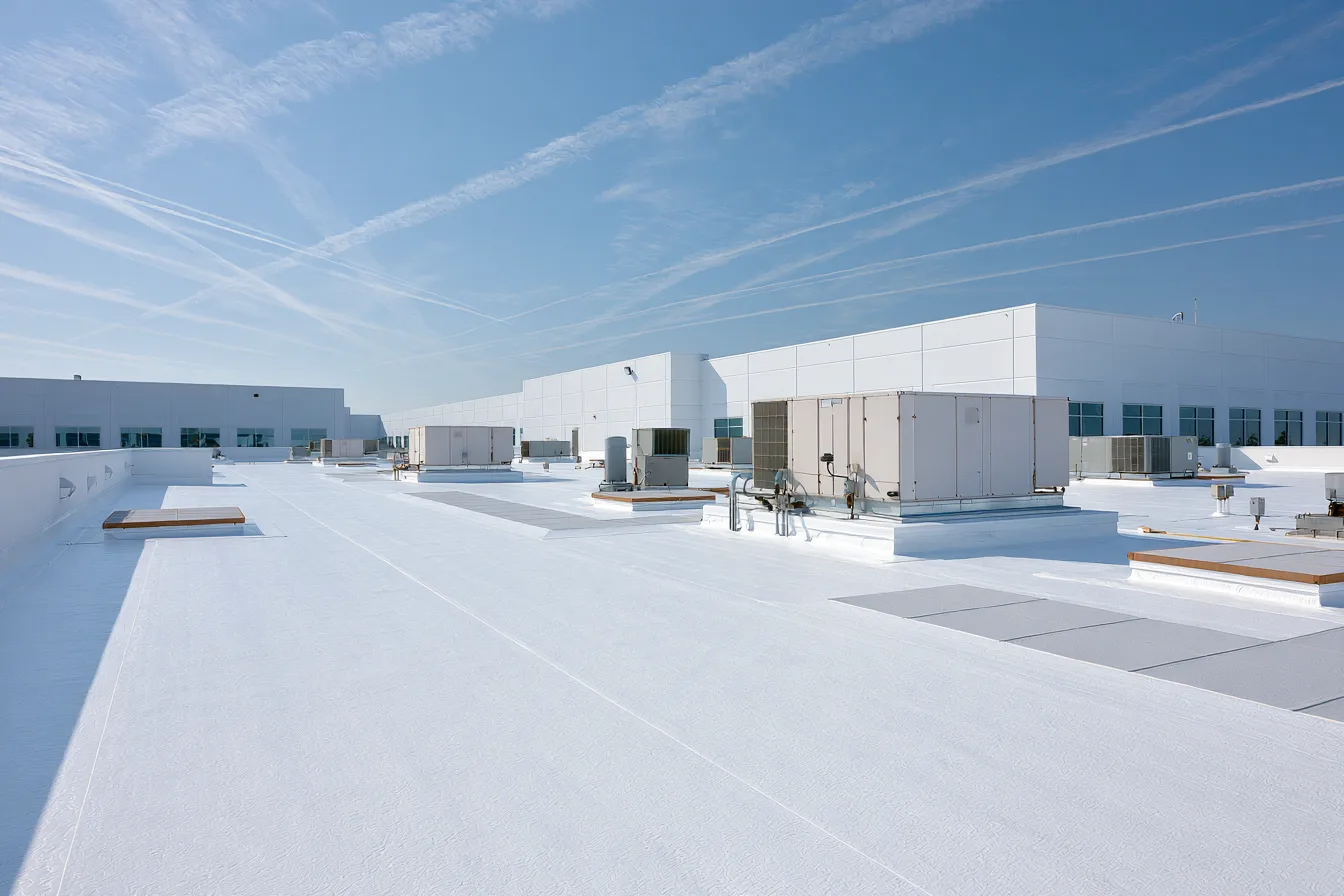
Wilshire Boulevard carries SH 174 through Burleson. The city's plan identifies mixed-use opportunities near John Jones Drive and Hulen Street, where retail, offices and homes can bring different needs to the same building. For an owner with a low-slope roof, the starting point is the actual roof system and what is happening below it, not an assumption about every frontage-road building.
Say where water appears inside, when it appears and whether rooftop equipment has recently been serviced. The roofer traces the leak across the field, seams and details and checks the drainage route. Visible findings may point to moisture below the membrane; confirming its extent can require additional testing or openings before a restoration or replacement scope is settled.
Commercial roofing services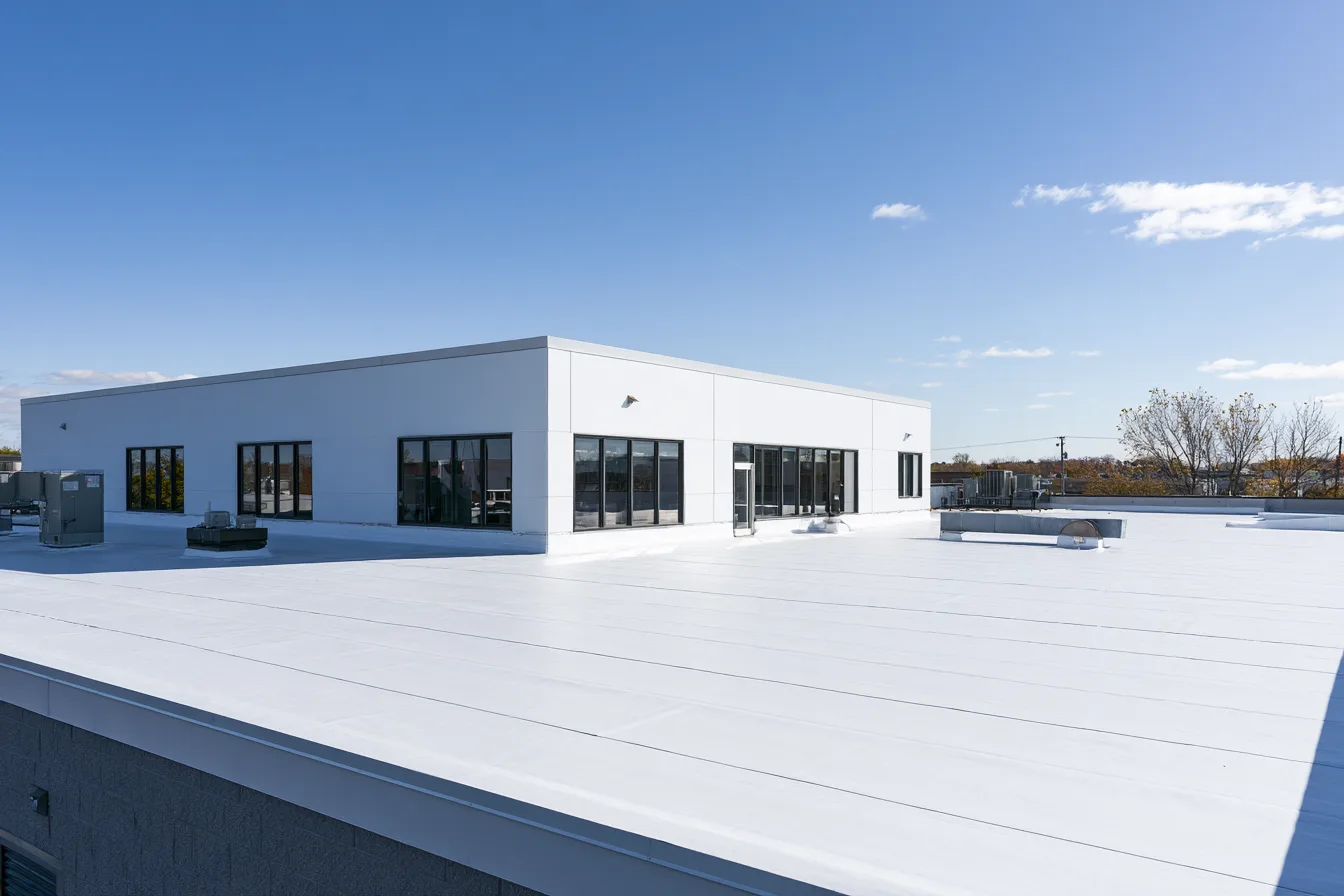
How a Wilshire roof and its details get checked
A membrane or built-up roof works as a connected assembly. The inspection includes the open field as well as the places where materials meet.
Seams and laps
An open seam or lap can admit water. Repair material and preparation have to suit the existing system: a weldable single-ply membrane needs a different approach from an aged asphalt cap sheet. The surrounding material must be sound enough to receive the repair.
Curbs and rooftop units
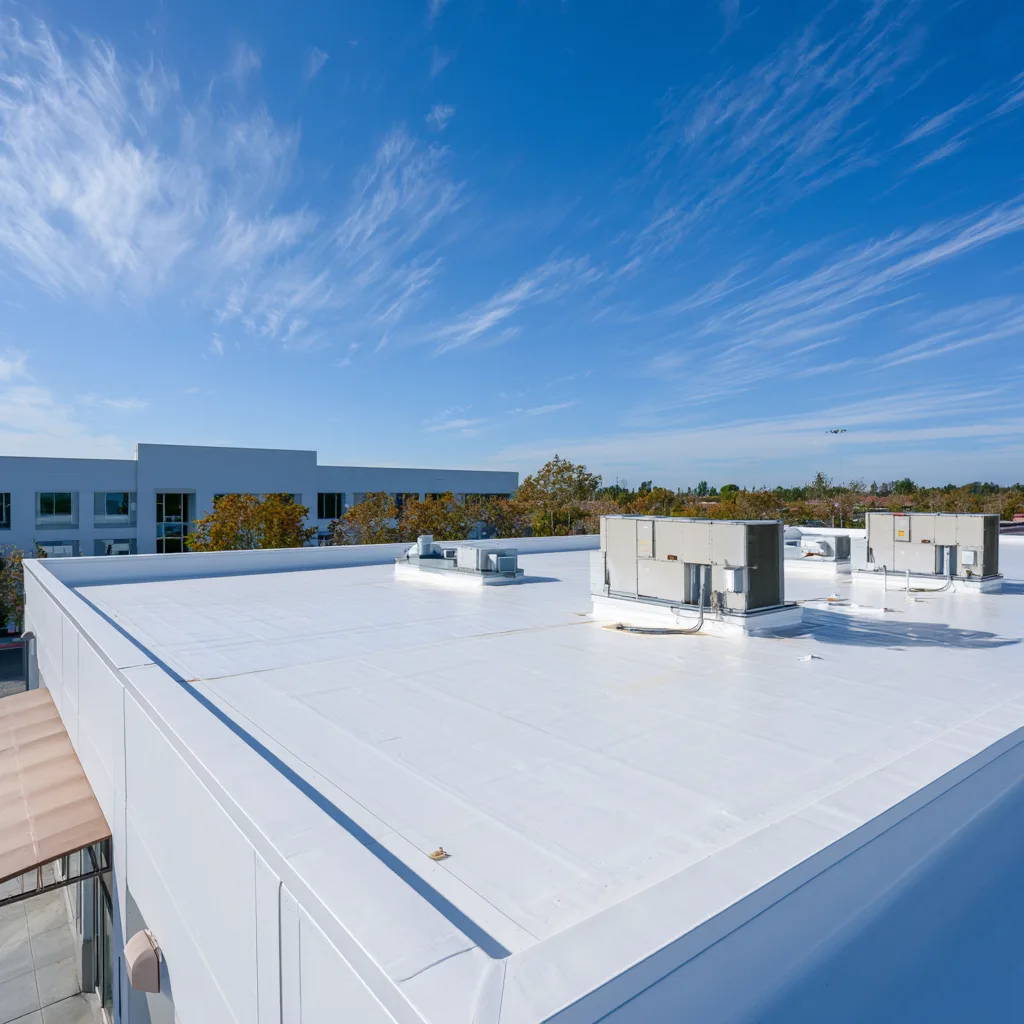
Where equipment rests on a curb or a support penetrates the roof, its flashing needs a complete connection to the field membrane. The roofer checks those details and nearby service paths for openings, damage and drainage obstructions without assuming equipment work caused the leak.
Drains and scuppers
Debris at an outlet, a blocked scupper or a low area can slow drainage. The roof surface and seams in that area still need inspection. Clearing an outlet, changing drainage details and repairing the covering answer different parts of the problem.
Parapet coping and terminations
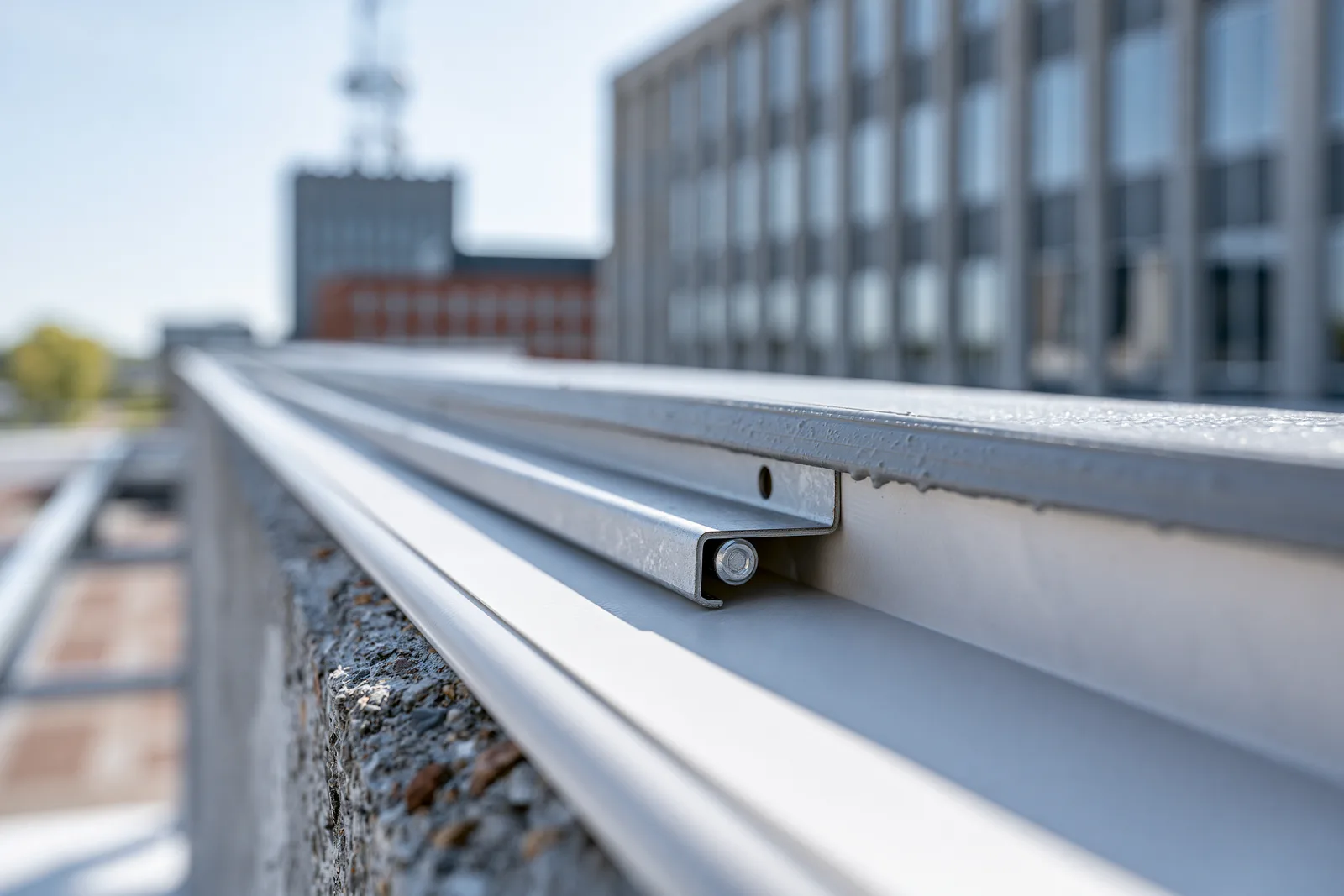
Parapet caps protect the wall top, while the roof's upturn and termination keep water out at the roof-to-wall connection. Open joints or loose attachments need to be traced through the assembly. A stain at the front wall alone does not identify which detail has failed.
Repair it, coat it or replace it
Repair the interrupted spot
A localized opening may be repairable when compatible surrounding material and sound support allow a secure connection. The extent of damaged material, access, preparation and any concealed work determine the scope and cost, not just the visible size of the opening.
Coat a sound roof
A coating system needs a suitable existing assembly, secure attachment, compatible preparation and workable drainage. Leaks and deteriorated or wet materials have to be addressed first. Where moisture is suspected below the surface, its extent needs to be established before deciding what can stay.
Replace the system
Widespread deterioration, extensive wet materials or a roof that cannot support a reliable repair can make replacement appropriate. Removal, permitted retained layers, drainage, attachment and equipment details all belong in that scope. TPO is one possible system to compare with the building's needs, not an automatic choice for every roof.
Mixed-use buildings and the road ahead
Retail below, homes or offices above
The city's Urban Mixed Use plan for Wilshire near John Jones Drive and Hulen Street puts retail on the first floor and residential or office above. On that kind of building a roof leak affects two sets of occupants and two kinds of finishes, and the roof access, the units and the drains all sit above someone's ceiling. The scope has to say how water is managed during the work, not just what goes on at the end.
Work around the tenants
Occupied work needs an access and protection plan. Identify loading hours, tenant entrances, sensitive spaces and equipment that cannot be interrupted without notice. The proposed sequence should address weather protection, debris and any shutdowns before work starts; continued operation depends on the actual building and scope.
Traffic and access along SH 174
The city's infrastructure list includes Hulen and Wilshire intersection improvements and Wilshire widening design work. A project listing does not establish today's construction stage. Confirm current access restrictions when planning the material drop, dumpster or lifting equipment, especially where deliveries share a busy frontage.
Wilshire Boulevard roofing FAQs
Can the roof be coated instead of replaced?
It may be suitable if the existing assembly can be retained and prepared for the particular coating system. Check attachment, compatibility, moisture and drainage, and define repairs before coating. Wet or deteriorated areas need investigation and an appropriate removal scope; a surface finish does not solve them. The coatings page develops those conditions.
The leak only shows up during heavy rain. Is that a drainage problem?
It may involve drainage capacity or an outlet that is obstructed, but wind-driven rain or an opening at a wall or roof detail can also show only in heavy weather. The roofer follows the water route and checks both the drainage and the covering. Repairing one while leaving the other unresolved can leave the leak in place.
We manage several buildings. Can you look at all of them?
Send the addresses, any known roof types and which buildings have active leaks. The contractor can confirm availability and access for each property, prioritize the requests and discuss the scope separately for each roof.
Tell us about the building
Send the address, how the building is used and where and when water appears. A roofer walks the roof for free and explains the findings. Mention tenant hours and access limits early so the next step fits the property.