Storm damage roof repair in Burleson
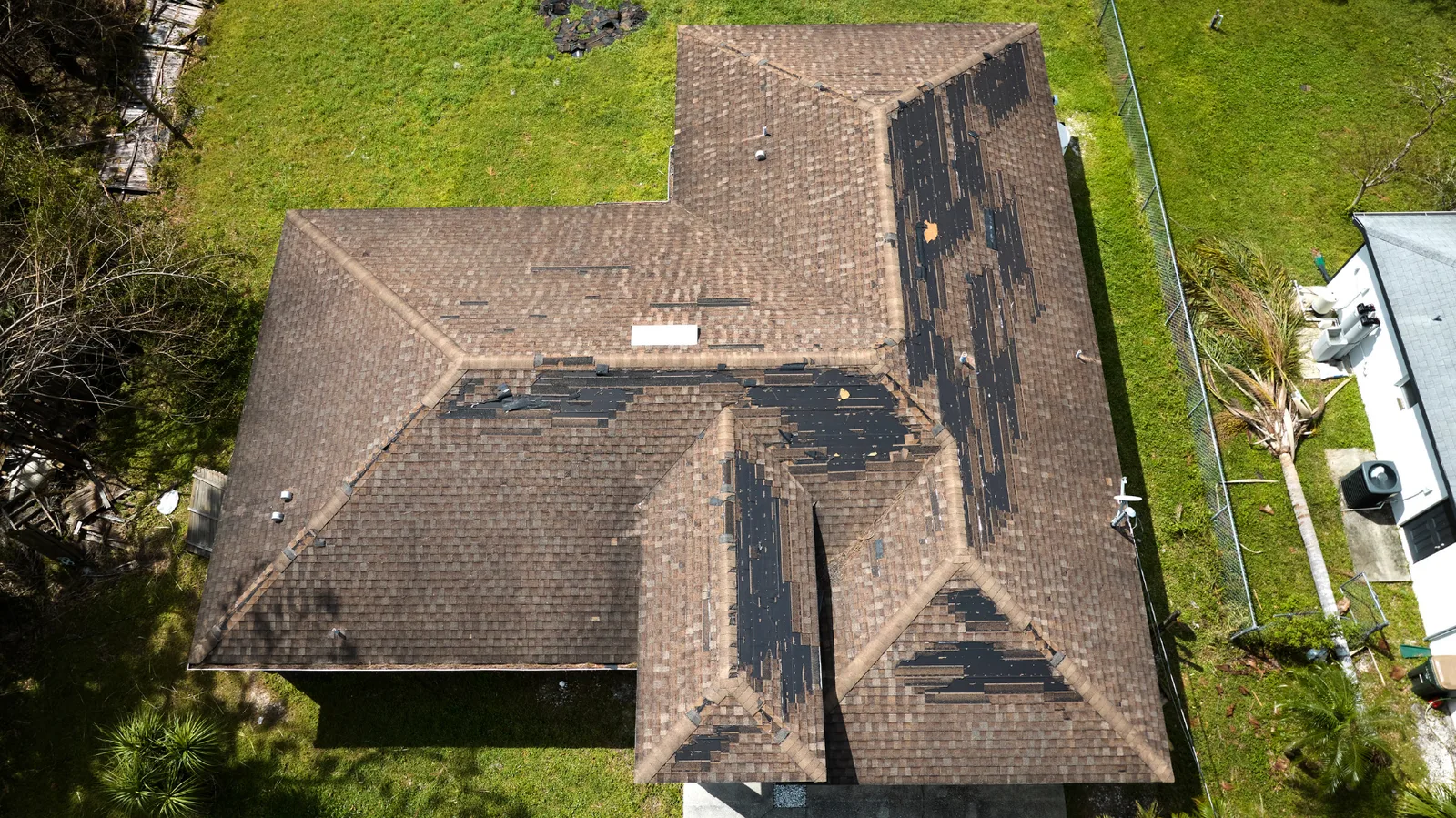
After wind or hail, the important question is what changed on your roof. Understand the damage, protect the home safely and separate any temporary measure from the repair that puts the roof back together.
Roofing, explained.
Check the home before chasing the roof
Start inside and at ground level. New water marks, missing shingles visible from below or displaced gutters are useful observations. Stay clear of damaged electrical equipment, downed lines and ceilings that sag under water. Immediate danger needs emergency help, not an online roofing form.
A safe description is enough to request an inspection. You don’t need to walk the roof looking for hail marks. Storm debris, wet surfaces and hidden damage can make that climb especially risky.
What wind loosens and hail strikes
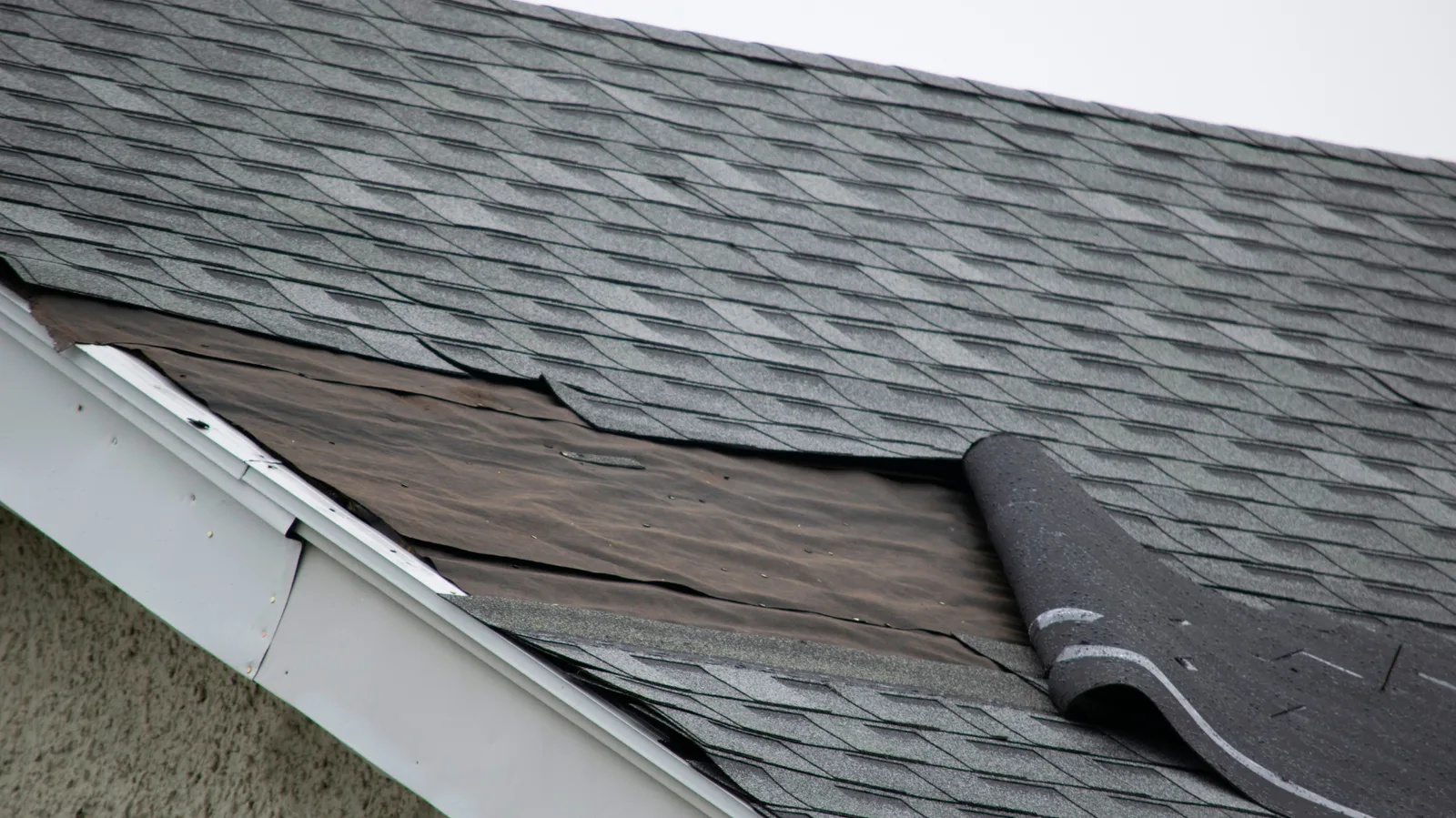
Wind can break a roof’s attachment
Lifted tabs, displaced edge material and missing shingles can expose layers that were not intended to remain uncovered. A permanent repair needs to restore attachment and overlaps, not simply place loose pieces back where they were.
Hail damage needs a closer reading
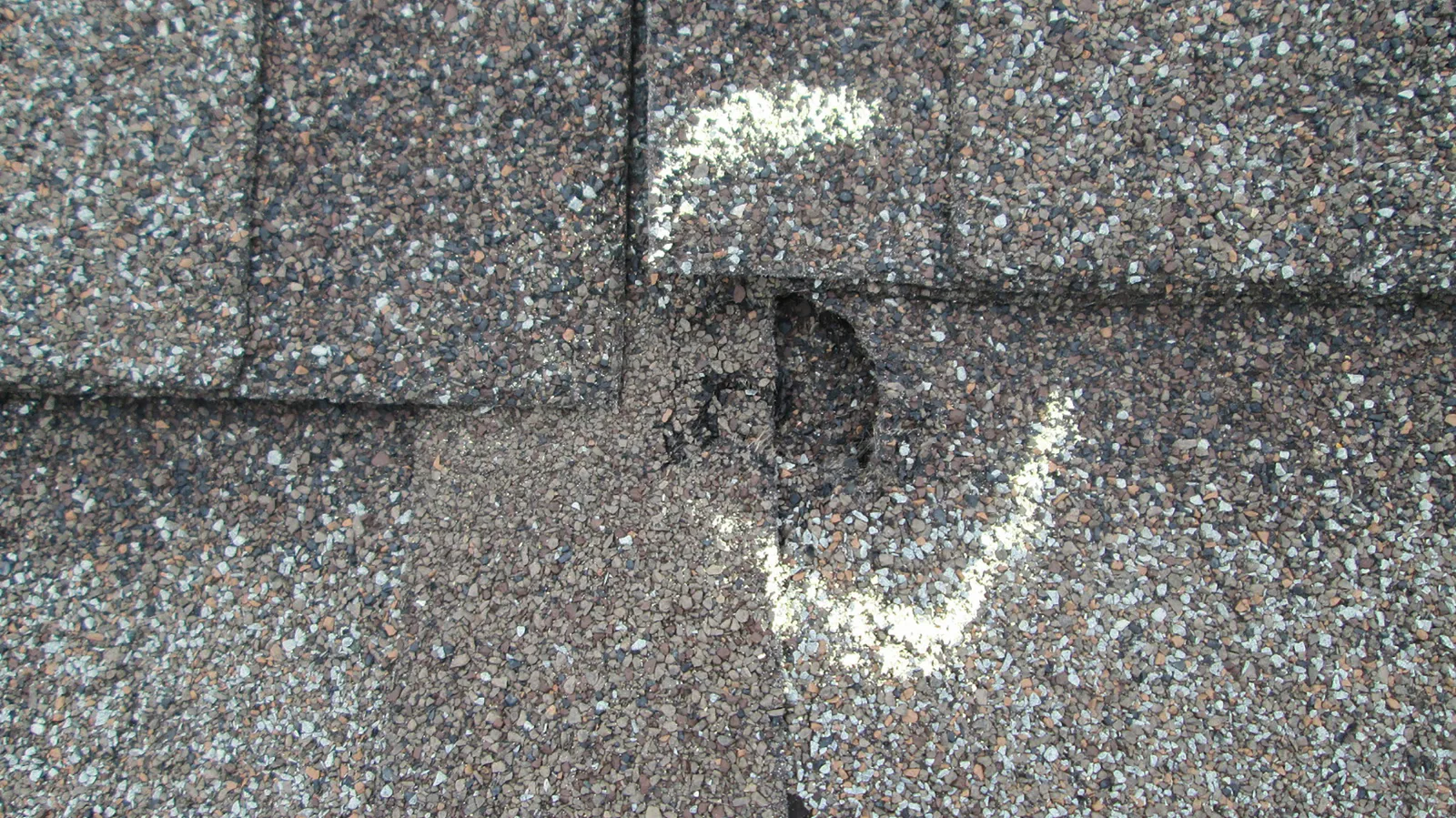
An impact can damage the shingle’s underlying mat even when the mark is subtle. Dents in nearby metal may add context, but they do not prove that every roof plane needs replacing. Weathering, scuffing and older repairs can produce other marks.
From temporary protection to a permanent repair
A tarp and a repaired roof serve different purposes. Temporary protection can reduce exposure while the condition and permanent scope are being worked out, but it does not renew damaged shingles, flashing or wood.
Identify the affected components
The visible damage, surrounding material and underlying condition guide the repair. Water inside can have traveled beyond the opening, so the affected roof area and the stained room need relating to each other.
Resolve the repair area
New shingles or flashings need a sound base and workable material around them. Where wind or impact damage is more extensive, a broader repair can be necessary to make those connections properly.
Close the permanent water path
The completed roof needs the details that temporary protection cannot provide: integrated laps, secured edges, sound penetrations and drainage. A tarp still present is a reminder that this part of the work remains open.
Why the first insurance check can be smaller
A repair estimate describes work. A claim payment also depends on the policy. Actual cash value (ACV) subtracts depreciation for age and wear; replacement cost value (RCV) can allow additional payment for covered replacement work. The roof may have its own settlement terms.
- ACV roof coverage
- Depreciation reduces the covered amount, along with the deductible. That depreciation is generally not paid back under ACV-only roof coverage.
- Replacement-cost coverage
- An initial payment may still subtract depreciation. Eligible withheld depreciation can be released after the required work and evidence, subject to the policy and the amount actually spent.
A percentage deductible is usually based on the insured dwelling amount, not the roof bill. The policy’s wind/hail terms determine the applicable deductible.
The insurer’s claim instructions set the required proof and any deadline for a later payment. Coverage and claim payment remain the insurer’s decision.
The Texas Department of Insurance explains that homeowners are responsible for their insurance deductible. A roofing repair recommendation and an insurer’s coverage decision are separate matters.
Dated condition photos, repair estimates and receipts help document the loss and any protective work. They do not guarantee coverage for a new roof or remove the deductible.
Storm damage FAQs
Will a damaged roof always leak right away?
No. A damaged covering may remain watertight in one rain and admit water in another. Conversely, an indoor stain after a storm may have another source. The absence or presence of an immediate drip does not establish the full roof condition.
My neighbor is getting a new roof. Does that mean I need one?
It is a reason to be aware of the event, not a diagnosis. Roof age, material, exposure and prior condition differ from property to property. An inspection should answer the question for your roof.
Is temporary protection enough if the leak stops?
Stopping the immediate entry of rain does not restore the damaged assembly. The permanent repair still needs to address the original opening and any affected materials below it.
What should I include in a storm-related request?
The property location, the storm date if known, the changes you’ve noticed and whether water is entering occupied space. There is no need to climb onto the roof to collect more detail.
Describe what changed after the storm
Request a free inspection and describe what you’ve noticed since the wind or hail. Start with the roof’s actual condition before deciding the size of the repair.