Commercial roofing in Burleson
A commercial roof has to protect more than the space directly below a leak. Drainage, rooftop equipment, wet insulation and access all affect the right repair or replacement for your Burleson building.
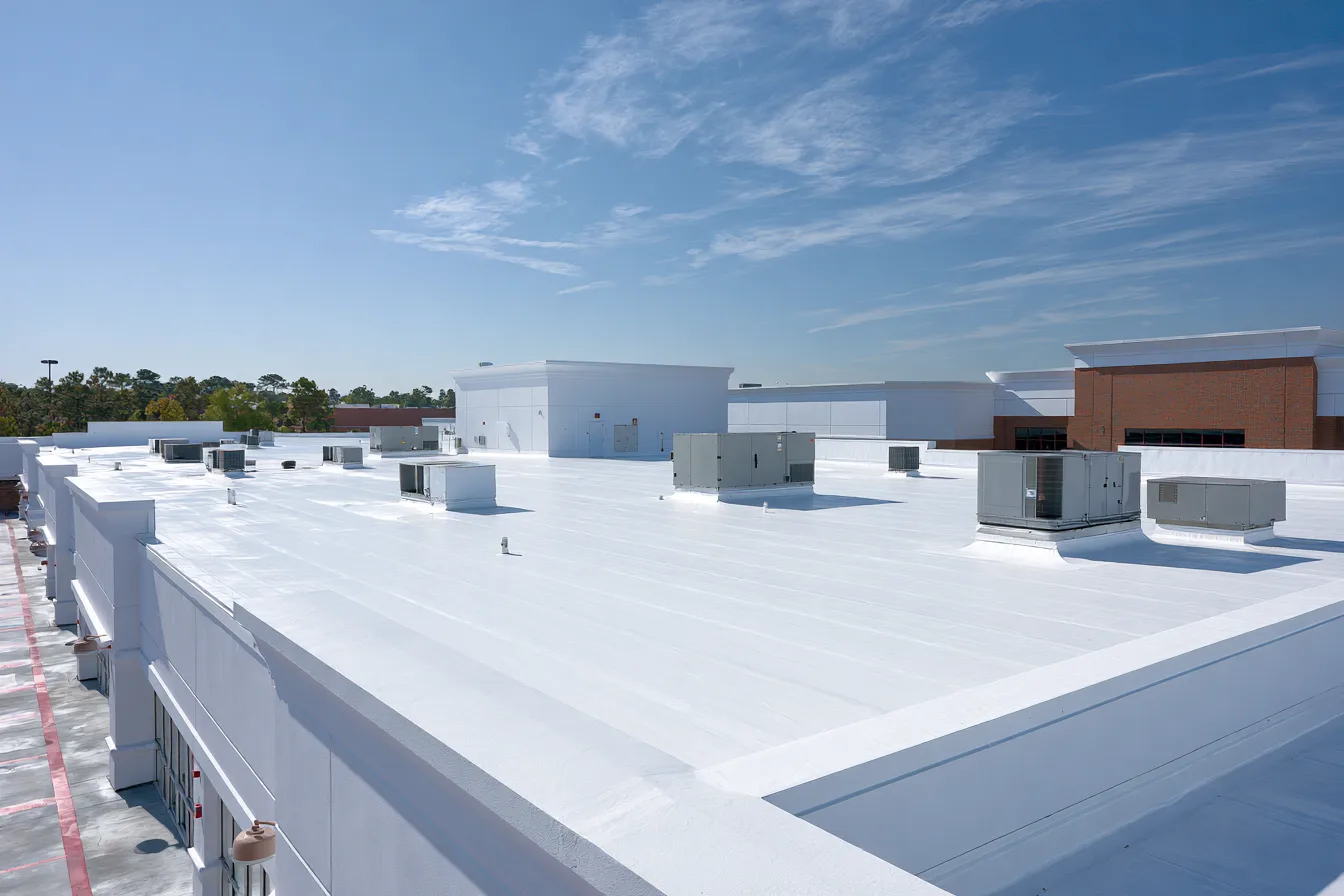
Roofing, explained.
Start with the roof and the business below it
A ceiling tile under an HVAC unit may point toward a curb flashing, but it does not prove that the unit is the source. Water can travel through the roof assembly before it appears inside. The condition of the membrane, seams, penetrations and drainage needs reading together.
The building’s use belongs in that conversation early. Deliveries, occupied offices, stock, sensitive equipment and rooftop service routes can change how materials are staged and how work areas are protected. These details help turn a roof diagnosis into a workable project.
Match the system to the building
“Flat roof” describes a roof’s low slope, not its material. Systems behave differently at seams, under foot traffic and around equipment. Start with the existing assembly and the demands of the building.
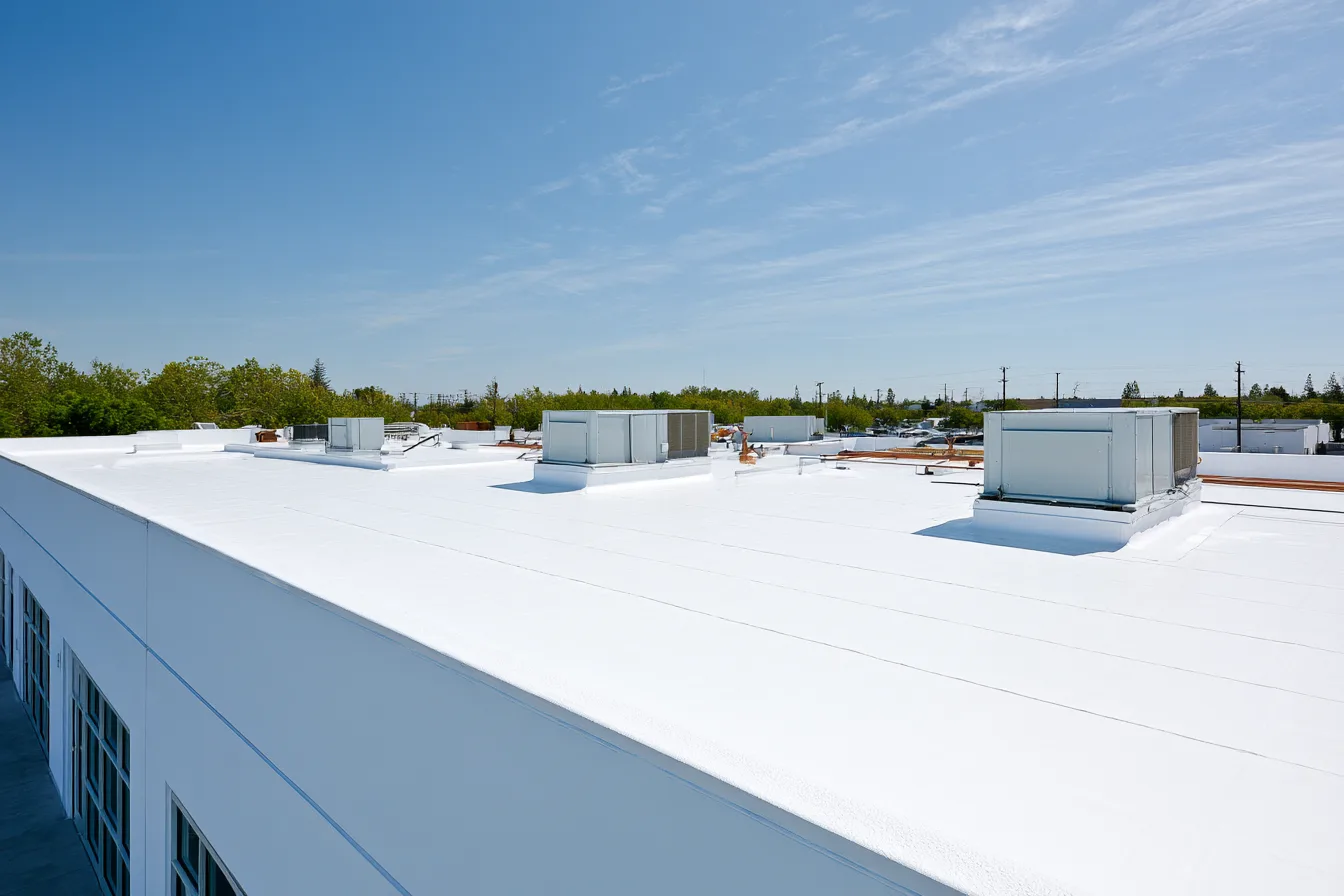
TPO
Single-ply membraneReinforced thermoplastic sheets are joined with heat-welded seams. Insulation, attachment, edge securement and curb flashings are part of the system, not optional details around a white surface.
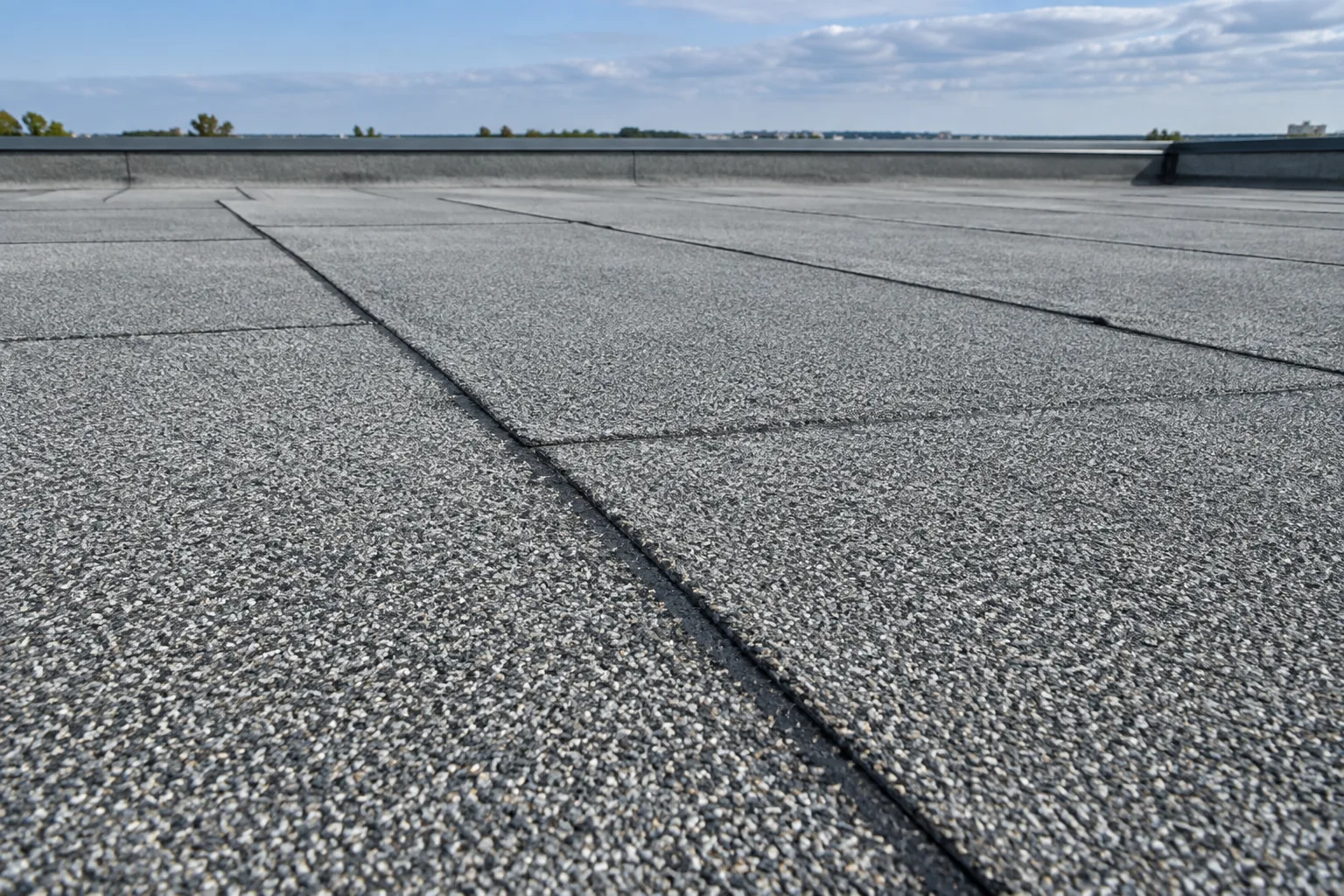
Modified bitumen
Asphalt-based assemblyReinforced asphalt-based sheets form a layered covering. The assembly, attachment method and flashings need to suit the deck and the building, particularly where service traffic is frequent.
Modified bitumen · AI-generated illustration
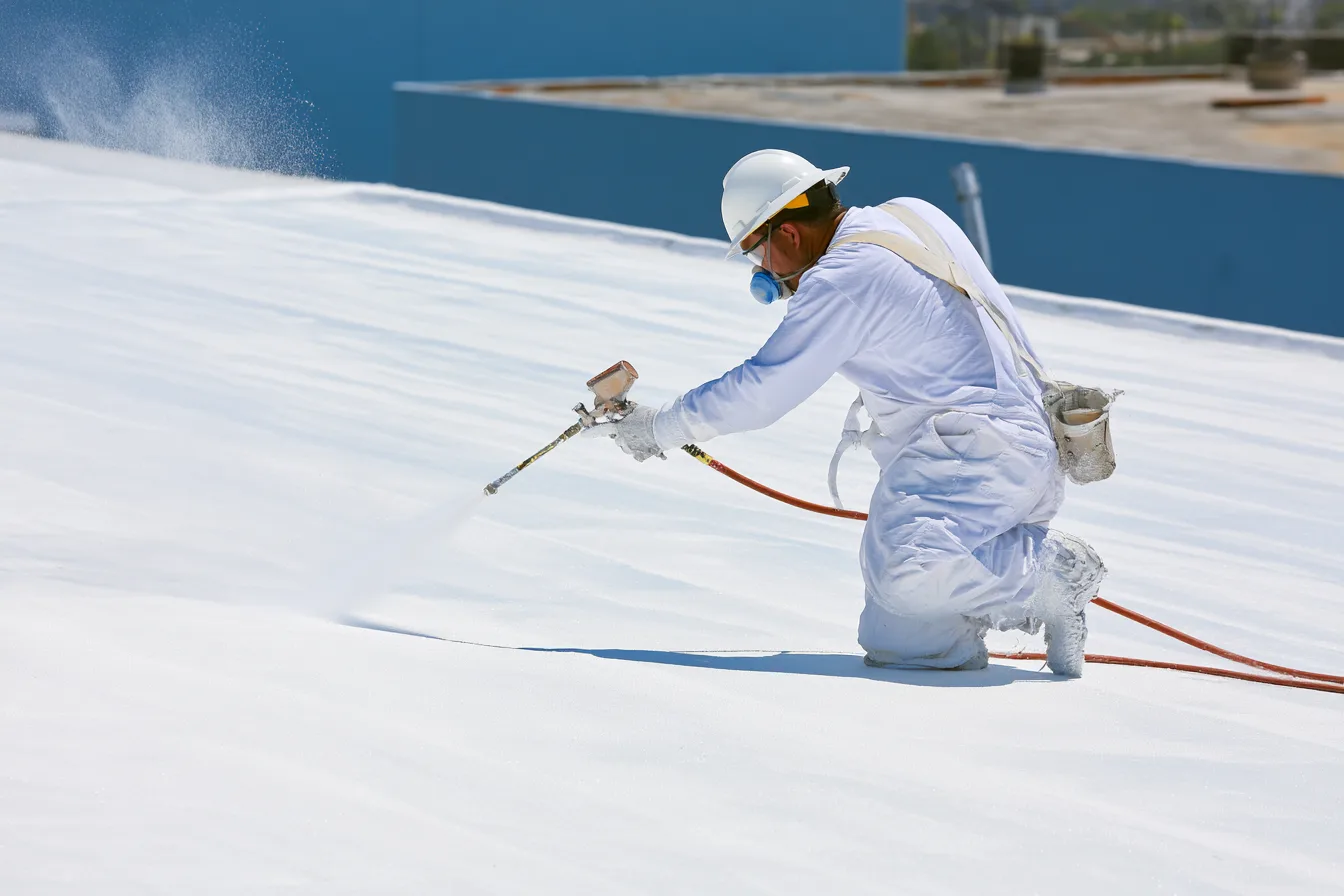
Roof restoration
Retain a viable roofA compatible coating can renew the weathering surface of a suitable existing roof. It needs a sound, properly prepared base and repaired details before the coating is applied.
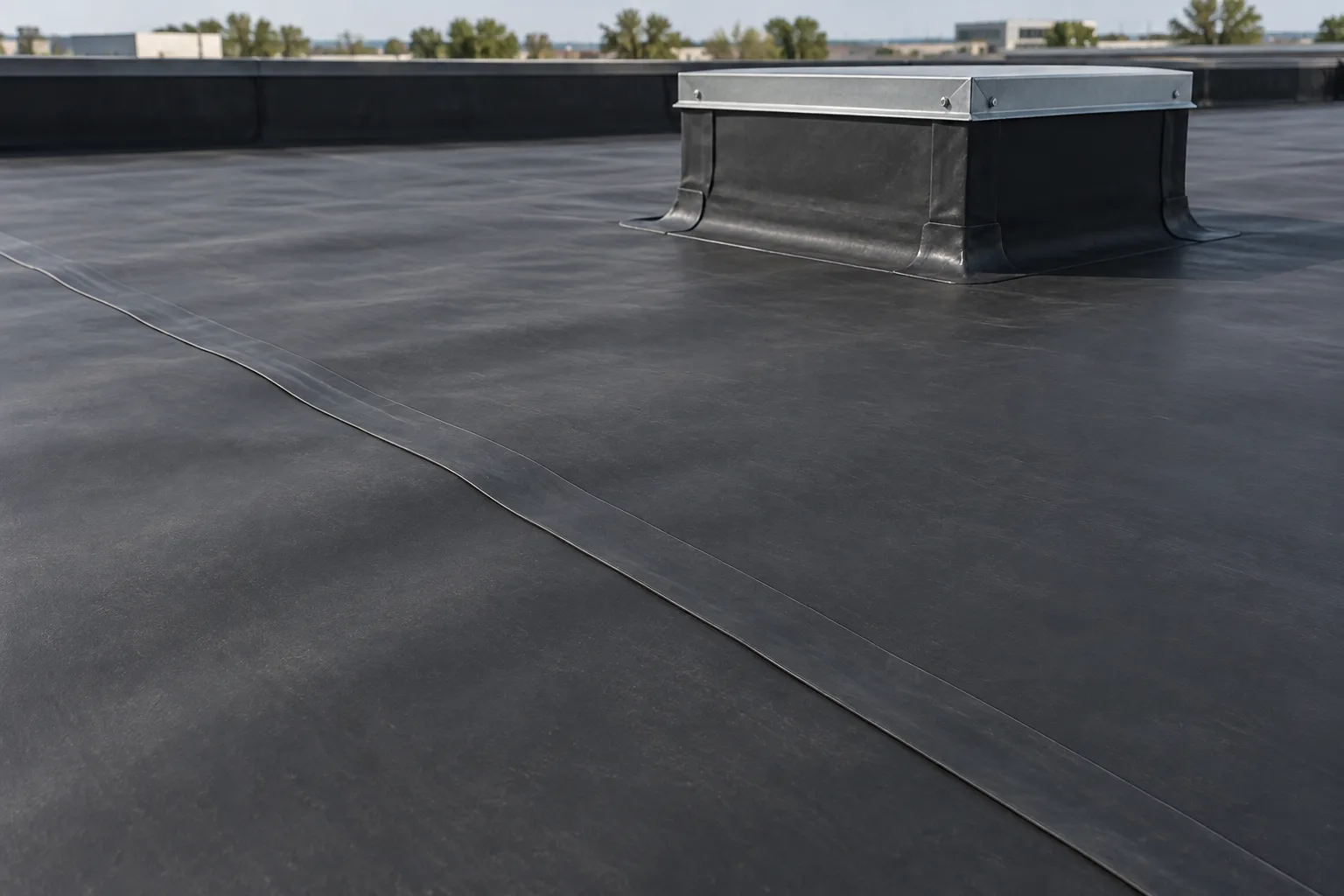
Other single-ply options
Match the exposureEPDM and PVC have their own seams, accessories and compatibility requirements. Rooftop exhaust and building use can influence product selection; no one membrane is the answer to every low-slope roof.
EPDM example · AI-generated illustration
Repair, restore or replace
The most useful question is how much of the existing assembly remains serviceable. A cheap surface treatment can become expensive if it leaves wet insulation or a drainage problem underneath.
Repair a defined failure
An open seam or a puncture in an otherwise sound membrane may suit a compatible repair. The surrounding material has to accept the repair, and moisture below the opening still needs investigating.
Restore a suitable surface
Coating is worth considering when the roof is structurally sound, compatible with the proposed system and free of unresolved wet materials. Adhesion testing and detail repairs are part of that decision.
Replace what cannot be kept
Widespread saturation, unstable materials or repeated failures can make a new assembly more useful. Replacement also provides an opportunity to address drainage and insulation instead of preserving an inherited weakness.
A scope that respects daily operations
A roof project can be organized around the building’s needs, but it cannot honestly promise no disruption. The scope should make the access, staging and protection decisions visible before work starts.
Establish the assembly and moisture condition
Existing drawings and repair records can help, but they do not replace looking at the roof. Suspected trapped moisture may call for investigation beyond a surface inspection.
Resolve the water route
Drains, scuppers, overflow provisions, tapered insulation and crickets guide water. A new membrane laid over the same low spot can leave the ponding problem intact.
Coordinate people and equipment
Roof access, HVAC service, deliveries and tenant entrances can conflict. Sequencing work and protecting openings requires the people using the building to be part of the plan.
Define the completion details
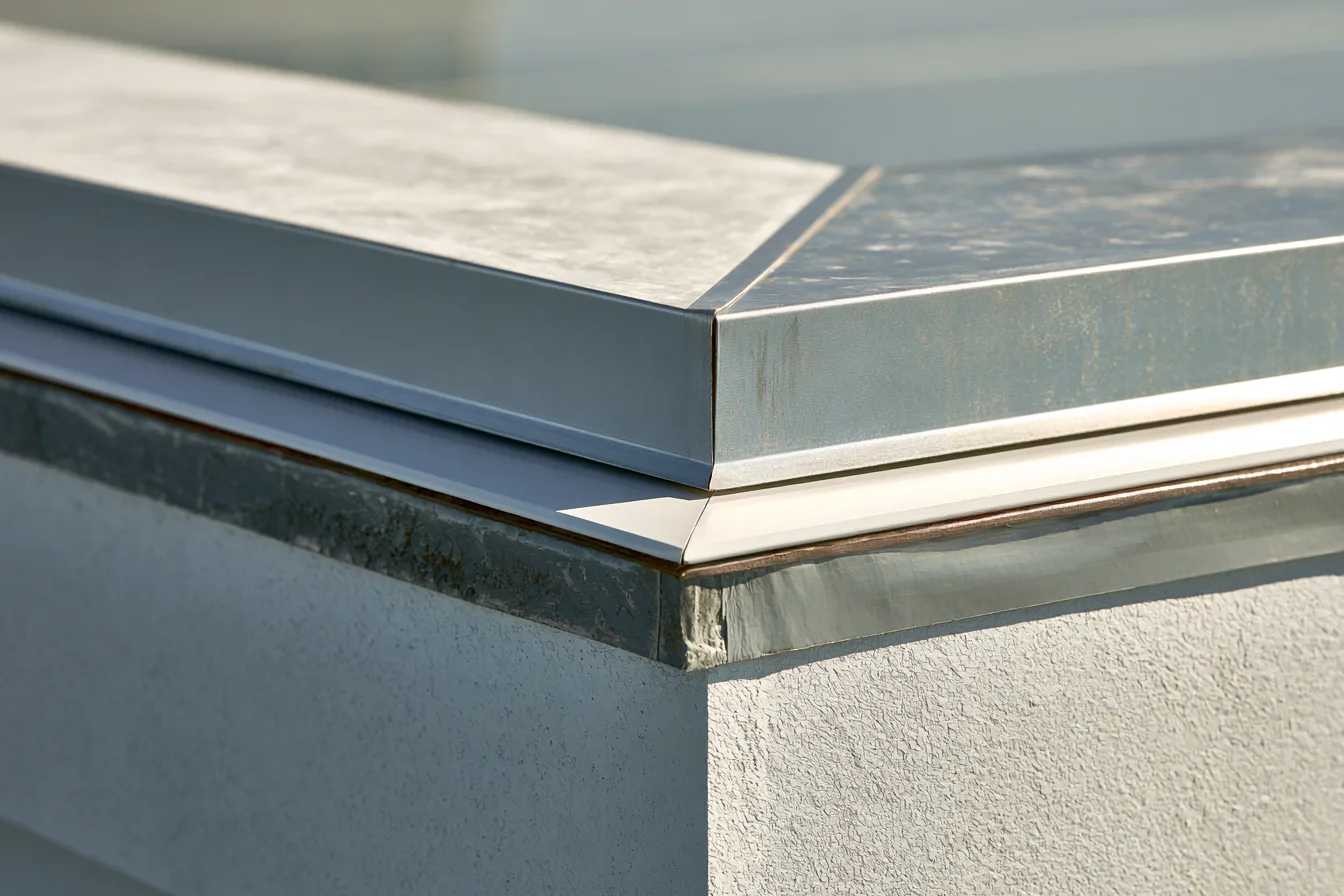
Edge metal, curbs and penetrations need finishing with the field membrane. The scope also needs to identify disposal, final checks and any manufacturer-specific warranty requirements.
Price the assembly, not only the membrane
Two proposals for the same roof area can include very different assemblies. One may retain dry insulation; another may include removal and new tapered insulation. Cover board, attachment, parapet work and equipment coordination can materially change the price.
A useful commercial project price makes those differences explicit. The complete scope explains whether the roof below the membrane is dry, what insulation can stay and whether drainage is being corrected.
TPO system detailsCommercial roofing FAQs
Can a coating stop the leaks without a replacement?
It may be part of a suitable restoration, but open seams, failed flashings and wet materials need resolving first. A coating is not a structural repair or a way to dry saturated insulation.
Does all the insulation need replacing?
Not automatically. Its condition, attachment and compatibility with the proposed roof matter. Wet or damaged areas need a defined repair scope; intact material may be usable if the assembly and applicable requirements allow it.
How does roof traffic affect the plan?
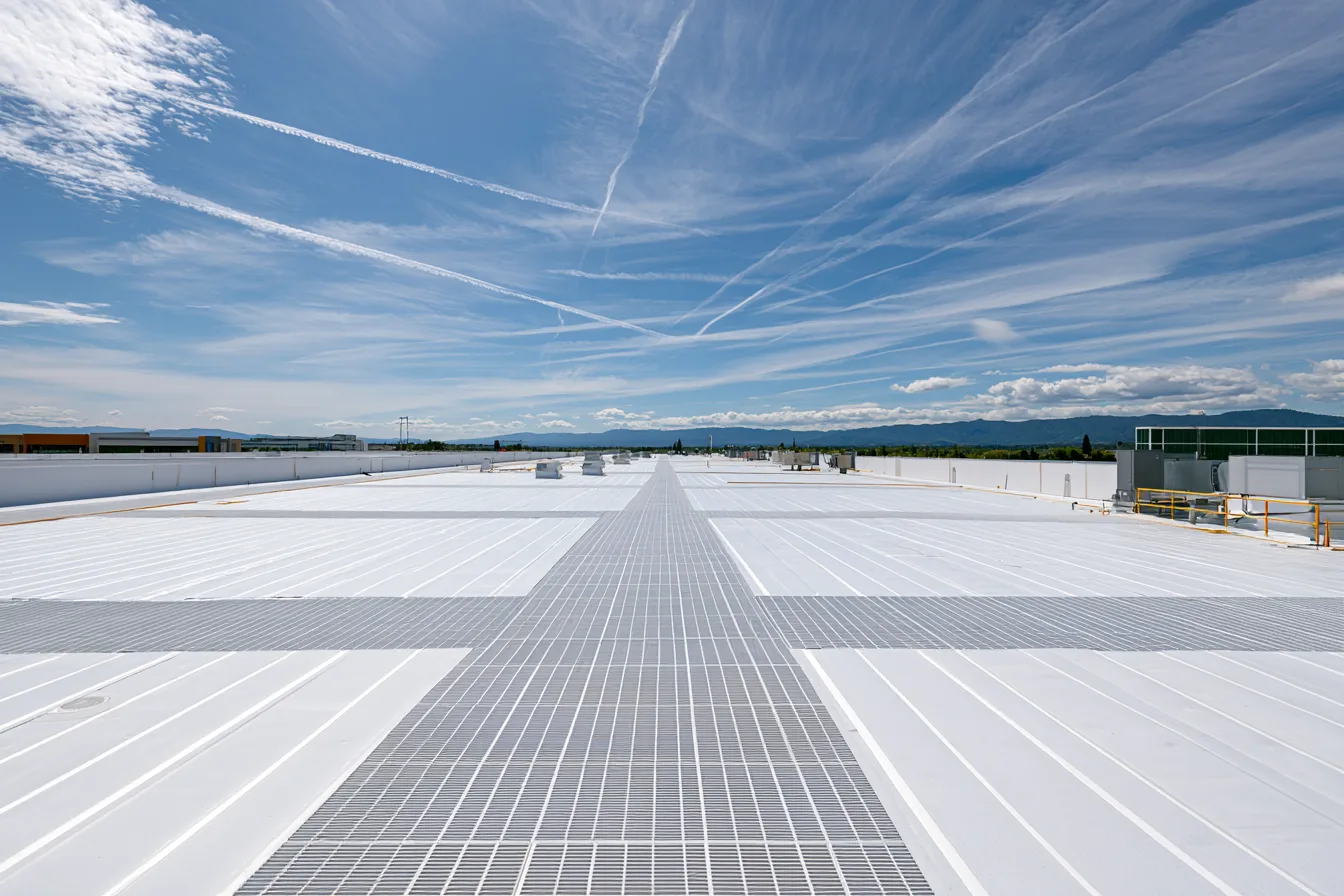
Repeated trips to equipment can damage an unprotected membrane. Intended access routes and compatible walk pads help address that exposure. Walk pads do not replace keeping drains and other details accessible.
Can the ceiling leak be below a different part of the roof?
Yes. Water can travel within a low-slope assembly before appearing in the room below. The opening, wet materials and drainage need to be considered together; the ceiling stain alone does not define the repair. The flat-roof repair guide explains how those clues affect the scope.
Bring the building into the conversation
Tell us how the building is used, where leaks are appearing and what you know about the existing roof. Request a free commercial roof inspection to begin working through the options.