Roof coatings and restoration in Burleson
Restoration can make sense when much of an existing roof is still worth keeping. The first decision is whether the roof beneath the coating is sound, dry and compatible with the proposed system.
Roofing, explained.
A coating needs a roof worth keeping
A coating renews a suitable roof surface; it does not replace a failing structure. Saturated insulation, unstable decking, open seams and failed flashings need identifying before the coating work is scoped.
A roof can look dry on top while retaining moisture below. Where the condition is uncertain, investigation of the assembly matters more than choosing the color or price of the coating. Adhesion testing also helps establish whether the proposed material will bond to the existing surface.
Ponding needs its own answer. A coating’s tolerance of water does not remove the load of standing water, correct a sag or reopen a blocked drain.
Silicone and acrylic do different jobs
Silicone systems
Silicone coatings can offer useful resistance to prolonged water exposure when the product and assembly are suitable. Surface preparation and adhesion remain essential. Dirt accumulation, traffic and compatibility with a future recoat are also part of the maintenance decision.
Acrylic systems
Acrylic coatings can suit well-drained roofs with application and drying conditions appropriate to the product. They should not be treated as interchangeable with a system selected for persistent ponding. The existing surface, weather window and manufacturer’s instructions control the application.
The specification matters more than the category
Two products within one category can have different substrate requirements, primers, reinforcement and thickness. The actual restoration system needs matching to the roof, rather than assuming that any bucket with the same broad label will perform alike.
Preparation is part of the restoration
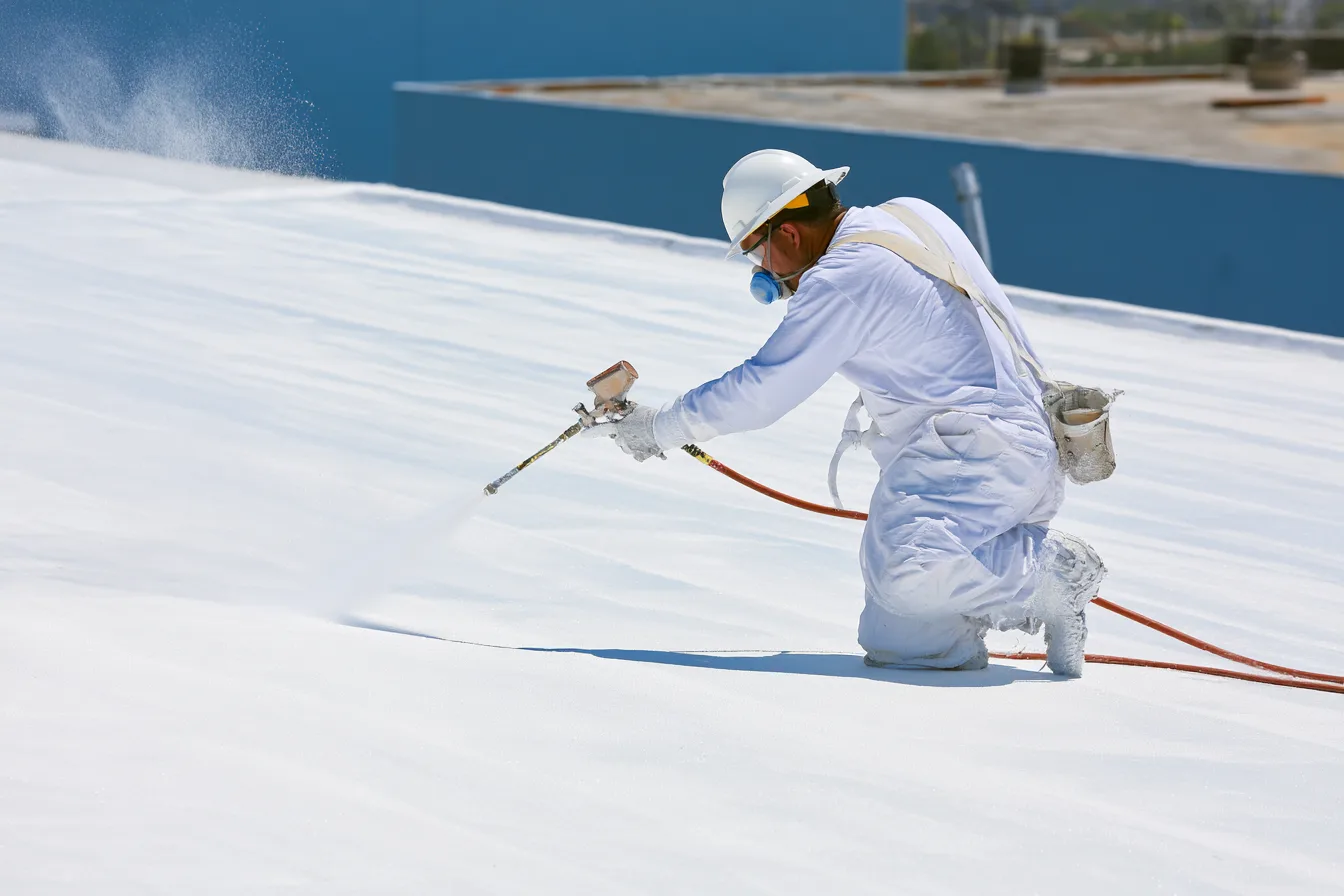
The preparation can be a substantial part of the work. A roof that receives careful detail repairs and the right coating thickness is a different project from simply being sprayed white.
Find and repair the faults
Investigate moisture, remove or replace unsound material where needed and repair seams, penetrations and flashings. Restoring a surface should not conceal a defect that remains active underneath.
Prepare for a reliable bond
Cleaning removes contamination that can prevent adhesion. Test areas and primers, where required by the system, help establish whether the substrate and coating work together.
Reinforce and apply the specified system
Vulnerable details may need reinforcement before the field coating. Coverage is specified by the cured, dry-film thickness, so application quantity and conditions matter.
Keep the restored roof maintainable
Drains, service routes and future recoating requirements remain part of the roof. The completion scope should identify the treatment applied and the care that its manufacturer calls for.
Compare restoration with the full replacement scope
The roof worth retaining
Retaining a viable roof can reduce removal and replacement work. But there is no honest blanket savings percentage without knowing the roof, the preparation and the alternative replacement assembly.
The restoration work included
Compare the areas included, wet-material repairs, drainage corrections, detail reinforcement and coating system. Warranty terms and exclusions are part of that comparison. A lower price that leaves known problems untouched is not the same restoration scope.
Find out what can stay
If the roof keeps leaking but much of the surface appears intact, request a free commercial inspection. Establish what can stay before deciding whether restoration is the right investment.