Gutter repair and replacement in Burleson
If rain pours over one corner or runs behind the gutter, start there. You may need a blocked outlet cleared, a loose run repaired or a better drainage route. The spill pattern helps decide which work will be useful.
Roofing, explained.
Start at the overflow, follow the discharge
Where does the water escape? A single overflowing corner may have a blocked outlet. A run spilling along its length may have lost its fall or support. A roof valley can also send concentrated runoff into one short section.
Watch from a safe place during rain if you can. Does water go over the front, escape at a corner or run behind the gutter? That description helps distinguish a drainage restriction from a joint or roof-edge problem. It is more useful than choosing a larger gutter before the cause is clear.
Repair a section or replace the run
A sound gutter with a local defect
A loose hanger, a damaged joint or a small section of misalignment may suit a focused repair. The attachment needs sound wood behind it, and the repair should leave a usable fall toward the outlet.
A run that has lost its shape or support
Widespread corrosion, damaged sections or a persistently poor drainage route can make replacement more practical. Any deteriorated fascia needs addressing before new hangers are attached. A new gutter cannot repair the wood that is meant to hold it.
The roof edge and gutter have to work together
The roof edge, gutter and downspout form one route. Fixing only the most visible part can leave the same wet area below.
Catch the water at the roof edge
Drip edge helps runoff leave the covering and clear vulnerable wood. Water arriving behind the gutter can point to that connection rather than the gutter’s size.
Carry it along the run
The supports have to keep the run falling toward an outlet. A low stretch between hangers can retain sediment and water even after the downspout has been cleared. Restoring that run is different from sealing a leaking corner.
Choose a useful discharge point
The downspout needs to release water away from the building through a route suitable for the property. Moving the outlet without considering the ground below can shift the wet spot instead of solving it.
Gutter guards still need drainage
Debris above and below the guard
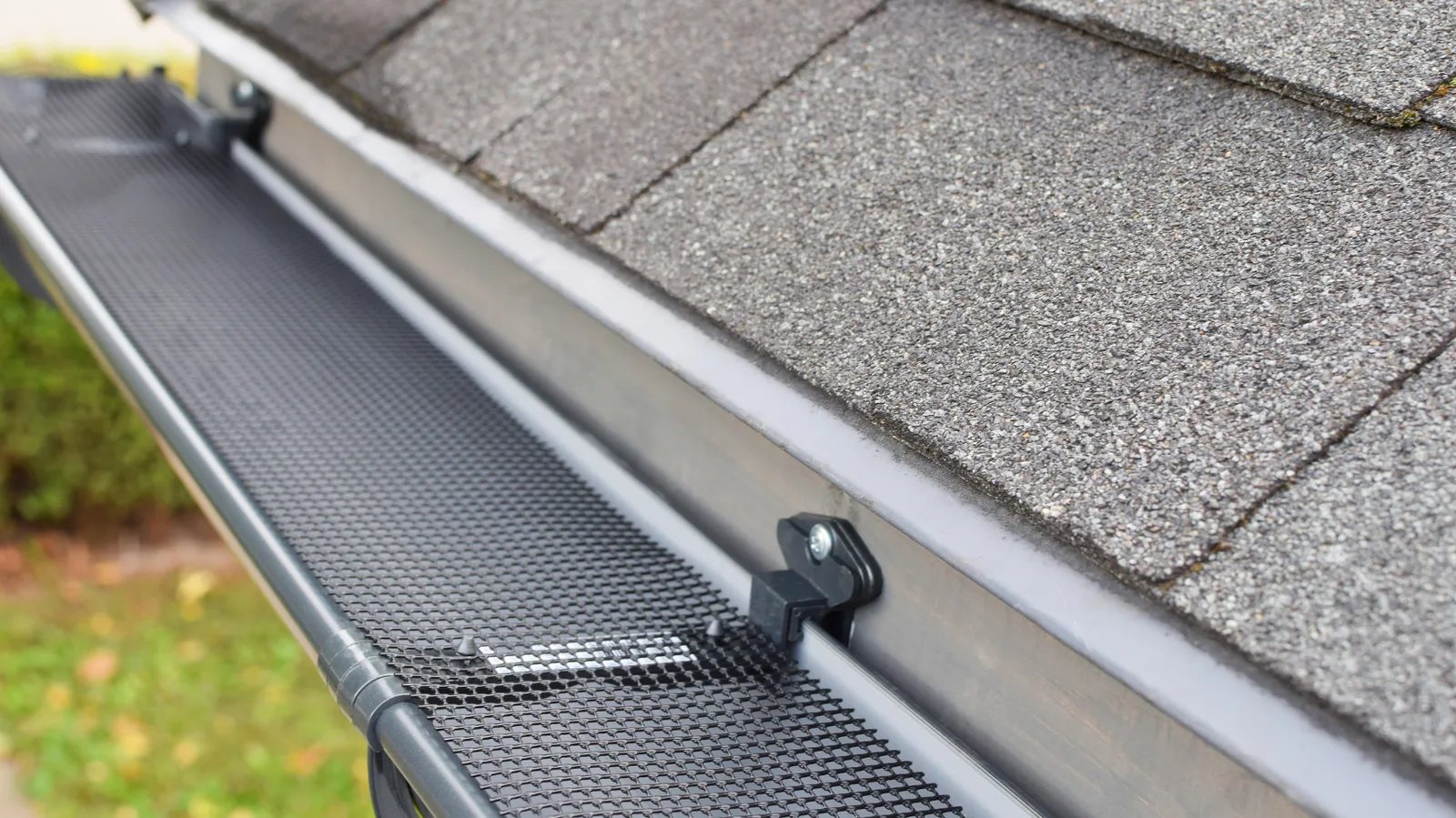
Guards can reduce some debris entering a gutter, but they do not eliminate maintenance. Leaves can collect on top, fine material can still enter, and outlets and downspouts can still become restricted.
Connections still need care
The type of debris, roof shape and safe maintenance access matter to the choice. Even a seamless gutter has corners, outlets and end caps that need sound connections. “Seamless” does not mean that the entire drainage system has no joints or places to check.
If gutter work is happening with a new roof, coordinate it with the roof-edge and replacement work so damaged fascia and the drip-edge connection are dealt with before the finished gutter is attached.
Show us where the water goes
Describe where the overflow appears or which section has pulled away. Start a roofing request with those details so the gutter and the roof edge can be considered together.