TPO roofing in Burleson
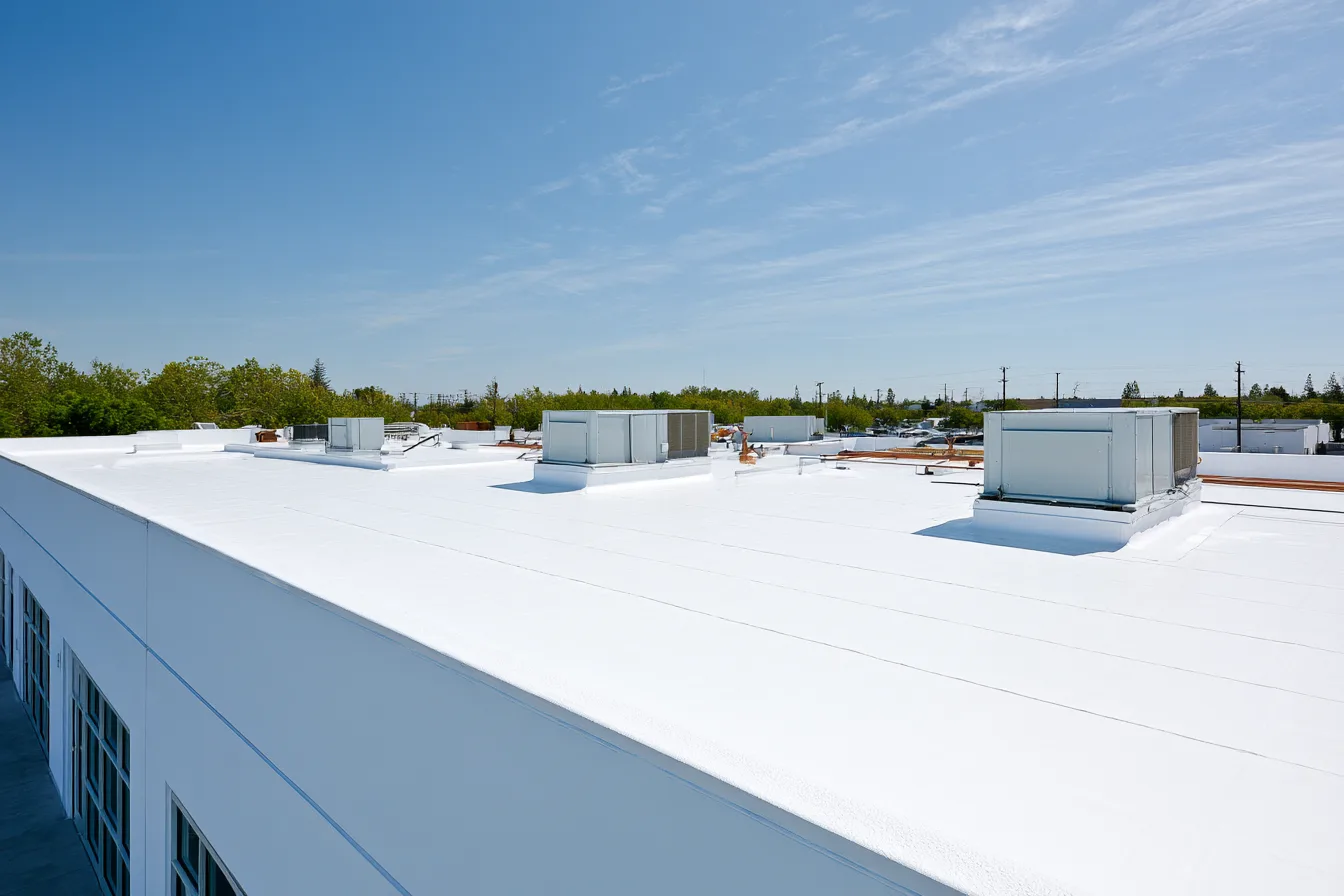
The white surface is the part of a TPO roof you notice first. The seams, insulation, attachment and drainage underneath determine how that covering works on your Burleson building.
Roofing, explained.
A heat-welded roof surface
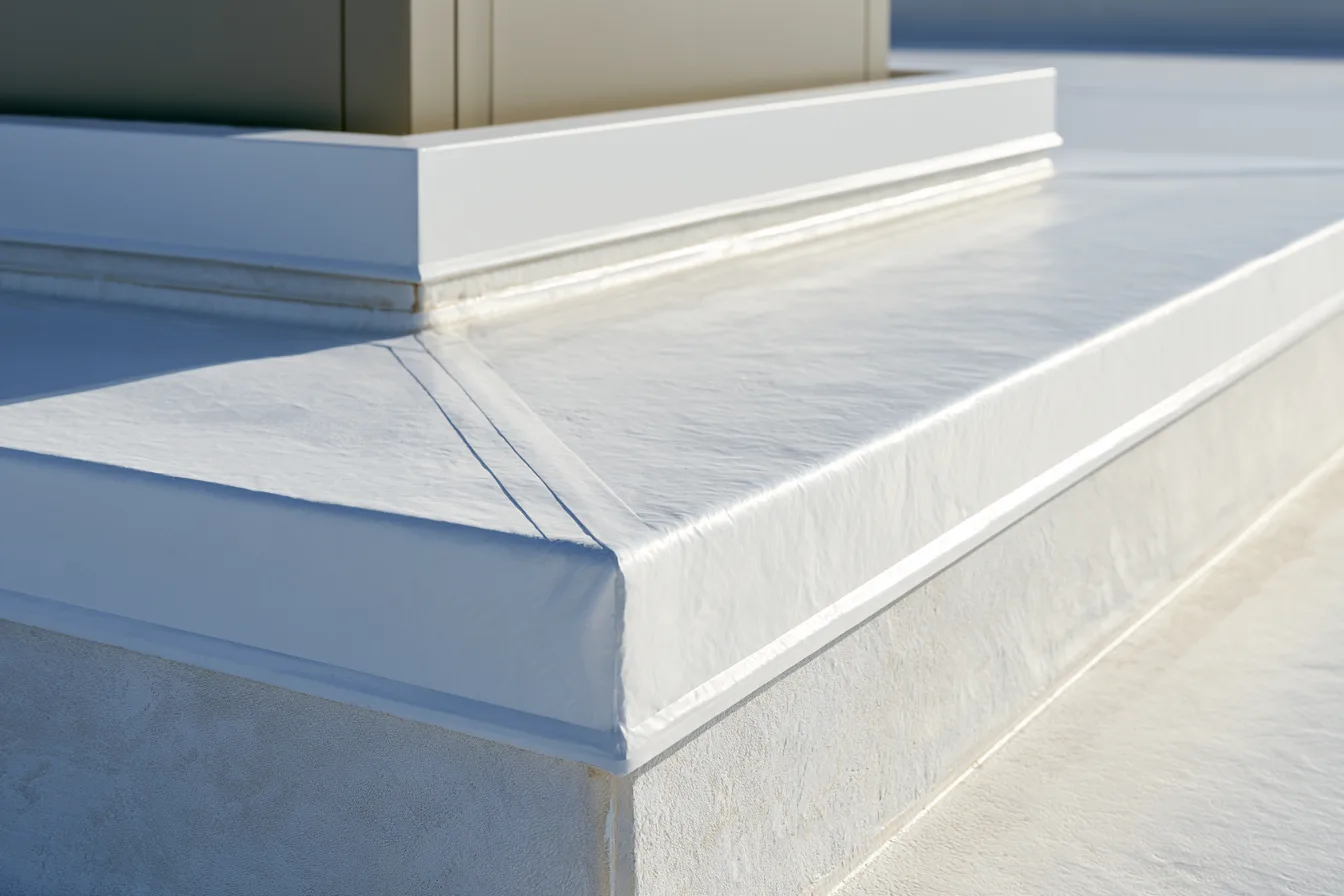
TPO stands for thermoplastic polyolefin. Its reinforced sheets can be joined with heat-welded seams, as described in Carlisle’s TPO system information. The welding joins overlapping sheets; it does not eliminate the need for separate details at walls, pipes, drains and equipment curbs.
Light-colored membranes reflect sunlight, but a cooler roof surface is not a guaranteed energy saving for every building. Insulation, building use, climate and the existing assembly all affect what a change means indoors.
Build the system from the deck upward
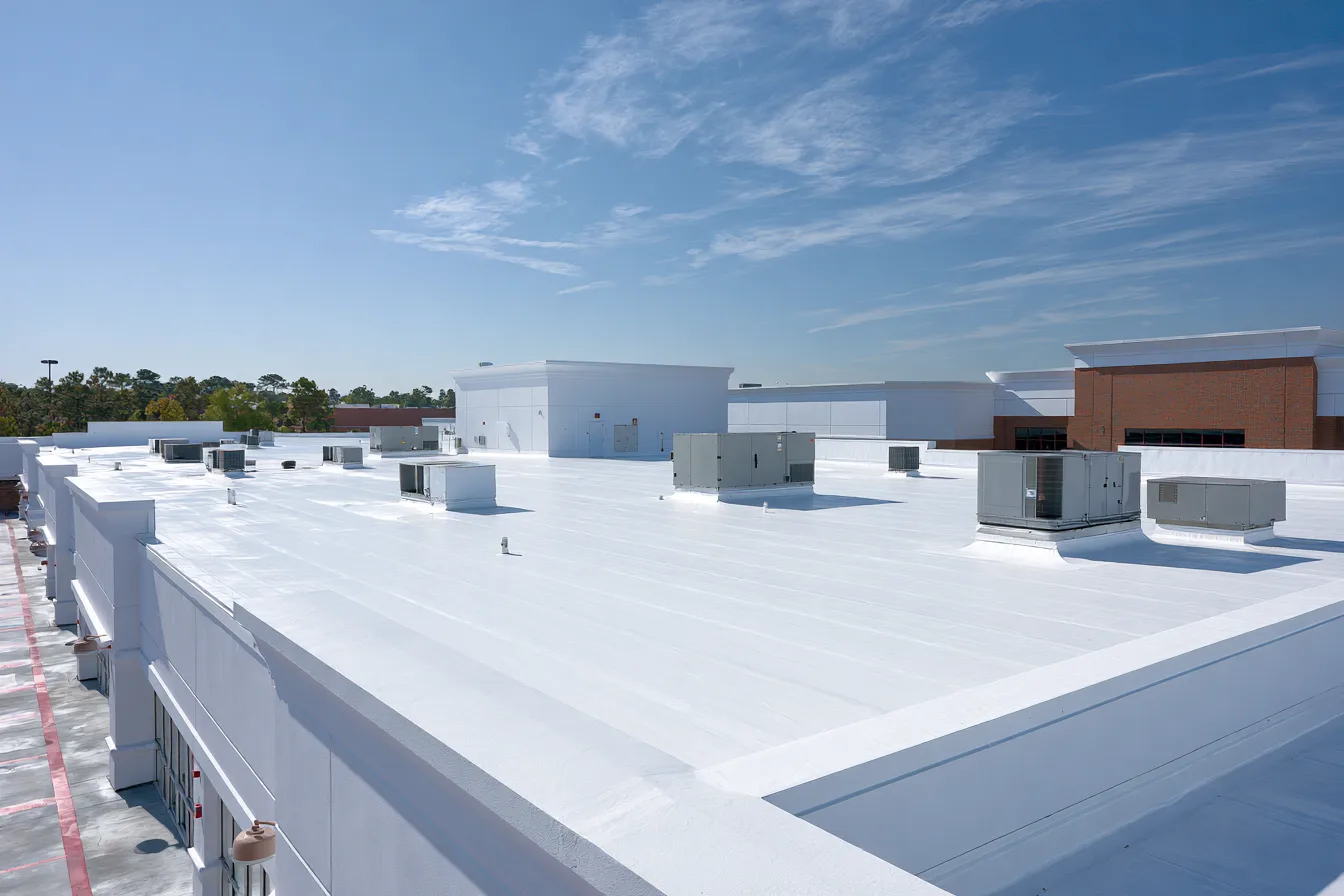
A TPO specification needs to describe the full assembly. The membrane depends on a stable base and a drainage route that does not leave water sitting in inherited low spots.
Deck and moisture control
The deck must suit the loads and attachment. Air or vapor control is a design question based on the building’s conditions, not a layer to add indiscriminately. Wet or unsound materials need addressing before the roof is closed.
Insulation and cover board
Insulation contributes thermal performance; tapered insulation can form drainage slopes. A compatible cover board can provide a more durable substrate and help protect the insulation beneath the membrane.
Attachment and details
Adhered and mechanically attached assemblies work differently. The deck, wind design, perimeter and selected manufacturer’s requirements guide the system, including the fasteners and flashings.
Thickness is one part of the choice
Membrane thickness matters, but it is not the whole specification. A thicker sheet cannot compensate for an open weld or an unsupported edge.
Consider service traffic
The path to HVAC equipment can see repeated foot traffic and tools. Compatible walk pads help protect intended routes, while keeping access to drains and inspection points clear.
Consider the roof as a tested assembly
Attachment, insulation, cover board and perimeter detailing work together under wind and other exposure. Selecting a membrane by thickness alone leaves those questions unresolved.
Read coverage as terms, not a lifespan
A manufacturer’s warranty may depend on approved details, contractor qualifications, inspection and the complete assembly. Thickness by itself does not establish the coverage offered on a particular project.
Repair and maintenance keep seams in view
Prepare the actual opening
TPO repairs need compatible material and a surface that can be prepared for a sound connection. A puncture may be local, but water below it can spread through the insulation. That possibility should be investigated before a patch is treated as the whole answer.
Keep the details serviceable
Regular attention to seams, drain connections, curb flashings and roof traffic helps catch problems at their source. Debris around drains needs removing safely; roof access should be handled by people equipped for the work. A general-purpose coating or sealant is not automatically a compatible TPO repair.
Plan a TPO roof around the building
For an existing TPO leak or a planned membrane replacement, include the building use and any known roof history in a free commercial inspection request. The system can then be considered as a whole.